
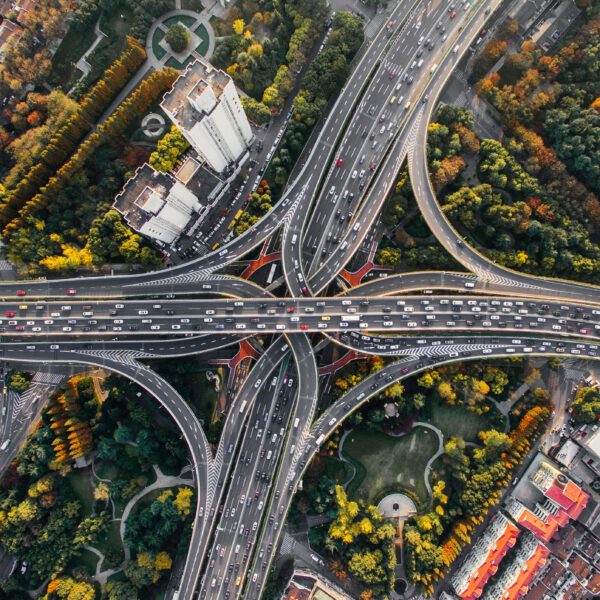
Image credits: IDEA League
Reframing the Architecture of Interchanges (RAI)
7 – 12 September 2026
A summer school investigating how the architectural and urban design of interchanges in the form of mobility hubs shapes the mobility experience through architectural spaces, intermodal flows, and mobility technologies by using visual design research methods.
Keywords: Urban form, Architecture, Urban design, Building typology, Mobility and infrastructure interchanges, Visualization techniques, Flows of people and user experience, Thick mapping, Design-driven research
Location
Milan, Italy
Participants
Application is open to Master and PhD Students of the member universities from the IDEA League Alliance.
Expenses
There are no tuition fees or accommodation fees. Lunches and official social activities will also be covered. Students from IDEA League member universities selected to participate in this summer school only have to pay for their own travel costs where applicable.
Requirements
– Curriculum vitae & publications list (with reference to the disciplinary field of research and stage of the studies)
– Letter of motivation
– Letter of recommendation (optional)
– Transcript of records (for master students)
– Supervisor approval (for PhD candidates from Chalmers)
New mobility challenges, needs and technologies are modifying the overall mobility experience of those places, the interchanges, where different mobility options intersect in space with flows of people, data, goods and natural resources. These mobility hubs, such as railway stations, airports, bus terminals, and metro stops, play a crucial role in enabling smoother transition between the modal splits and the cities.
In this context, the summer school “Reframing Architecture of Interchanges (RAI)” investigates how the design of mobility hubs shapes the mobility experience by re-imagining the relationships between humans, intermodal flows and the architectural setting. The summer school follows the research and workshop activities initiated last year at TU Delft’s Department of Architecture. It aims to expand the analysis on human interaction with mobility space and technologies to capture «how the specific relation between the moving body and its material environment opens up (or narrows down) to particular modes of mobilities, different speeds, trajectories, etc.» (Jensen, 2023, p.27).
In this way, the summer school encourages participants to critically reimagine by redesigning the mobility hubs. This analytical process leads to co-design scenarios, to better integrate the mobility systems in the city while addressing the challenges posed by recent mobility and technological shifts.
Workshop investigation:
The investigation will be carried out for case studies that correspond to different urban relationships and morphologies of intermodal hubs of the Milanese crown.
To address the interactions between mobility hubs, people and technologies, different lenses of investigation will be deepened, such as articulation of the hub’s modal split, intermodal layout of the hub, sensory experience and safety perception in the hub, hub’s digital and physical interfaces, wayfinding.
– ARTICULATION AND FLOW of the hub, in the form of its modal split and mobility flows, its intermodal morphology and its integration in the urban fabric;
– PERCEPTION AND SAFETY of the hub in the form of user perception of comfort and safety, sensory experience of the lighting, sound, touch, smell and safety during day/night;
– INTERFACES AND WAYFINDING of the hub in the form of digital and physical interfaces footprint, interaction and wayfinding.
Each of these features will be imported into one final visual representation that summarizes the main findings and draws the features of intermodal hubs, identifying critical factors that open possible evolution scenarios. These themes will be explored through visual representation and thick mapping methods to identify critical features of intermodal hubs to envision future design scenarios.
Workshop organization:
The students will be divided into groups of 4 (max.), working on the selected topic of investigation and a specific location of the case study. Students will perform these analysis trough visual explorations and design research methods: architectural critical reading by drawings (diagram, plan, axonometric views, sections) and other visualization and thick mapping techniques by manipulating and reframing analytical tools, dear to architectural and urban design and planning disciplines, to represent the addressed topics and their related data.
– Step 1: Offsite/onsite observation and mapping through drawings (2D and 3D) and data collection;
– Step 2: Research by drawing (graphic interpretation) of the main findings from the analysis in one final drawing.
Learning Objectives
- Recognize different data and factors influencing the process and design making of intermodal hubs
- Take position on the different intermodal organization of current hubs, in relation to new forms of mobilities and new technological features that are spread in contemporary hubs.
References
Davis, J. L. (2020). How Artifacts Afford: The Power and Politics of Everyday Things. The MIT Press. https://doi.org/10.7551/mitpress/11967.001.0001
Davis, J. L., & Chouinard, J. B. (2016). “Theorizing Affordances: From Request to Refuse. Bulletin of Science”, Technology & Society, 36(4), 241–248. https://doi.org/10.1177/0270467617714944
Eckart, P., & Vöckler, K. (Eds). (2022). Mobility Design: Shaping future mobility. JOVIS Verlag GmbH.
Eckart, P., Vöckler, K., Knöll M. & Lanzendorf M. (Eds). Mobility Design: Shaping future mobility. Volume 2: Reserach. JOVIS Verlag GmbH.
Jensen, O. B., (2023). “Mobilities Design. Affordances, Atmospheres, Embodiments” in Eckart, P., Vöckler, K., Knöll M. & Lanzendorf M. (Eds). Mobility Design: Shaping future mobility. Volume 2: Reserach. JOVIS Verlag GmbH.